SHARA Celebrates the Grand Opening of the Porter Property Accessible Boardwalk
The South Haven Area Recreation Authority (SHARA) recently celebrated the grand opening of the new accessible boardwalk at Porter Dunes Park, an exciting milestone that expands opportunities for visitors of all abilities to experience one of Southwest Michigan’s most unique natural landscapes.
Offering breathtaking views of Lake Michigan and the surrounding dune ecosystem, the elevated boardwalk represents the first phase of a larger low-impact trail network developed through a partnership between SHARA and the Southwest Michigan Land Conservancy. The project was thoughtfully designed to improve accessibility while protecting the property’s sensitive environmental features.
Abonmarche was proud to partner with SHARA throughout the project, supporting the successful Michigan Natural Resources Trust Fund (MNRTF) grant application and providing engineering design services for the accessible boardwalk.
To minimize impacts to the surrounding environment, the 6-foot-wide elevated boardwalk was designed with a galvanized steel support system and hand-installed helical pier foundations, reducing disturbance to existing dune soils and vegetation. Throughout the design process, our team collaborated closely with the Michigan Department of Environment, Great Lakes, and Energy (EGLE) Critical Dunes permitting team to ensure the project met environmental requirements while complementing the natural character of the site.
The completed boardwalk is more than an accessible pathway, it is a connection between people and the outdoors, providing visitors of all abilities the opportunity to explore, appreciate, and protect the natural beauty of Porter Dunes Park.
We are grateful to SHARA, the Southwest Michigan Land Conservancy, EGLE, and all project partners who helped bring this vision to life. This project is a great example of how thoughtful planning and engineering can create meaningful recreational opportunities while preserving the landscapes that make our communities special. Watch highlights from the grand opening to see how this project is helping create lasting connections between people and the places they love.
Celebrating Engineering Week: Infrastructure That Strengthens Communities
Each year during National Engineers Week, we recognize the professionals who design, improve, and protect the systems communities rely on every day. Founded by the National Society of Professional Engineers, Engineering Week highlights the critical role engineers play in safeguarding public health, supporting economic growth, and advancing innovation.
At Abonmarche, Engineering Week is a reflection of the work we are privileged to do alongside the communities we serve.
Engineering That Makes a Lasting Impact
From municipal water and wastewater system improvements to infrastructure planning and environmental services, our engineering teams design practical, forward-thinking solutions that help communities thrive.
Every project represents more than drawings and specifications. It represents:
Responsible wastewater management
Infrastructure that supports growth
Compliance with evolving regulatory standards
Long-term performance and fiscal responsibility
Strong infrastructure begins with strong partnerships. We collaborate closely with municipalities, utilities, and community stakeholders to understand their goals and challenges, delivering solutions rooted in data, experience, and long-term stewardship.
The People Driving the Future of Infrastructure
Behind every successful project is a team committed to excellence.
Our engineers bring together technical expertise, field experience, and innovative problem-solving to address increasingly complex infrastructure needs. As systems age and regulations evolve, the demand for resilient, sustainable solutions continues to grow.
We are proud to contribute to that future strengthening communities through thoughtful design and responsible engineering.
This Engineering Week, we celebrate the professionals who make that work possible and the impact their work has across the region.
Women in STEAM: Designing Places That Serve Real People
In engineering, architecture, and land surveying, we often talk about success in technical terms, such as square footage, schedules, budgets, load calculations, and compliance. And yes, those things matter. But they aren’t the whole story.
The truth is, this work is deeply human.
Every technical decision connects back to real life in some way:
A safer intersection means fewer crashes—and more confidence for families crossing the street.
A well-designed public space makes it easier for people to gather, connect, and stay awhile.
A resilient utility or stormwater system quietly protects homes, businesses, and essential services.
A thoughtfully planned building supports wellness, accessibility, and safety from day one.
These impacts aren’t abstract. They’re things our teams see and feel once a project moves off the page and into the world.
Senior Landscape Architect Kathy Burczak describes that moment clearly. “Each time I attend a ribbon cutting or grand opening for a project we’ve worked on, it’s a reminder of why we do this.” Seeing cyclists on the Marquette Trail, people using Canal Plaza, or golfers at the Wee Course brings the purpose into focus.
That realization also shows up in smaller, everyday moments. Staff Engineer Lara Brown mentions that “driving through residential subdivisions I’ve worked on… reminds me that real people live in the places I’ve designed.” Roads and utilities may fade into the background, but people rely on them every day. CAD Technician Keri Van Antwerp captures it simply: “One day you look at them and realize, people are using this.”
Some projects make that connection impossible to ignore.
Project Manager Miranda Bishop recalls an accessible boardwalk project where the contractor shared that his daughter, who is quadriplegic, would be coming to experience it. “Knowing this project allows her, and so many others, to access and enjoy the lake is something I’ll never forget.” It’s a reminder that accessibility isn’t just a requirement; it’s personal.
Staff Engineer Maghan Homan points to projects like affordable housing, recovery support housing, and senior living communities, work that helps people stay safely housed. “Being part of that work is incredibly rewarding,” she says, and it’s easy to understand why.
More Perspectives Create Better Outcomes
If our work is about people, then who is involved in designing it matters.
Having women in STEAM isn’t just about representation; it’s about how problems get solved. Complex projects require collaboration, communication, and a willingness to look at challenges from more than one angle. When teams bring different perspectives to the table early, they tend to ask better questions and land on better solutions.
Project Engineer Liz Roberson puts it honestly: “Having a variety of perspectives on a team can be frustrating… but it always makes the project turn out better.” Our sites are used by people of all abilities and life stages, and teams that reflect that reality tend to design better outcomes.
That value shows up in both big picture decisions and small details. Maghan Homan notes that “sometimes it really helps to reach out and ask someone else for input, even if you aren’t sure they’ll have insight.” Miranda Bishop shares how a woman’s perspective made a real difference on a restroom project, details like changing stations, hooks, benches, and managing small children don’t always surface unless someone brings that lived experience to the table.
And sometimes, a different perspective changes the direction of a project entirely.
On the Five Mile Hill project, the original plan was to replace an old wooden deck with another wooden deck. Kathy Burczak and her team proposed a low retaining wall with seating and landscaping instead, more attractive and lower maintenance. That shift led to an award-winning project, reinforcing her belief that “when our teams reflect the people our projects serve, the solutions benefit everyone.”
Visibility Changes the Pipeline
Seeing someone like yourself in a role can make all the difference.
When young women see engineers, architects, surveyors, and project managers leading meaningful work, it sends a powerful message: there’s a place for you here.
Miranda Bishop speaks directly to that reality. “You may be in the minority in these fields, but that doesn’t mean you don’t belong.” She points to the organizational, leadership, and project management strengths women bring to every phase of a project.
Maghan Homan echoes that encouragement: “Be bold. Be brave. Find other women to connect with, ask questions, and absorb as much knowledge as you can.” Representation doesn’t just inspire, it helps sustain the future of the profession.
Leadership Takes Intention
Progress in STEAM doesn’t happen by accident. It takes intention, through mentorship, sponsorship, opportunity, and trust.
Kathy Burczak’s advice is refreshingly simple: “Go for it, there are no limits to what you can do.” CAD Technician Keri Van Antwerp reminds us that the payoff often comes later: “One day you’ll look at a project and be able to say, ‘I helped create that.’” And Project Manager Leah Bectel points to the breadth of opportunity available today, noting that “the opportunities, from scholarships and internships to full-time careers, are endless.”
The Future Is Better When More People Shape It
Women in STEAM aren’t waiting for their turn. They are leading teams, shaping communities, and delivering meaningful work right now.
Women in STEAM Day is a moment to celebrate that, but it’s also a reminder. When we make room for more voices and perspectives, we don’t just strengthen our industry. We strengthen the places and people our work is meant to serve.
Because at the end of the day, the built environment is a people business.
Linking South Bend: Delivering the Link Trail Through Collaboration and Innovation
South Bend just got a whole lot more connected. Completed in April 2025, the Link Trail is a 1.5-mile, multi-use corridor linking the University of Notre Dame to downtown. Designed with pedestrians and cyclists in mind, this trail turns everyday streets into safe, vibrant, and inviting spaces, without disrupting vehicular traffic. Beyond its physical improvements, the Link Trail is also a case study in collaboration under pressure, showcasing how municipalities, academic institutions, and engineering consultants can deliver complex projects on accelerated schedules.
A Design That Puts People First Built entirely within the existing right-of-way, the Link Trail demonstrates the power of thoughtful urban planning and adaptable, solution-oriented design. The project stretches along LaSalle Avenue, Hill Street, South Bend Avenue, Notre Dame Avenue, and Angela Boulevard, featuring:
Wide multi-use path with raised crosswalks and separate sidewalks
Enhanced lighting and traffic-calming features
Thoughtful landscaping and signature wayfinding signage
Upgrades to underground infrastructure, including storm sewer, sanitary sewer, and water main improvements
These improvements create a safer, more attractive route while maintaining smooth traffic flow with a proper Complete Streets approach. Early coordination with stakeholders, including AEP on high-voltage transmission line crossings, ensured the project remained on schedule and safe for the community.
Meeting the Community’s Needs Before the trail, students and residents had limited options for non-vehicular travel between the campus and downtown. The Link Trail now:
Reduces traffic congestion, especially during Notre Dame football weekends
The project highlights the unique role of Notre Dame students, who supported research, community engagement, and project planning. Their involvement added valuable insight and reinforced the trail’s connection to local learning and civic participation.
More Than a Trail: A Placemaking Triumph Robust public engagement shaped the project from day one. Residents influenced key design choices, ensuring the trail reflects the community’s vision. Signature branding and landscaping make it instantly recognizable, while programming led by Visit South Bend and the University of Notre Dame, including community walks and student activities, keeps the space active and welcoming. To help measure this success, MACOG received a grant to install a trail counter. The data collected will track trail usage, giving planners and community leaders valuable insight into how the Link Trail supports mobility, recreation, and economic vitality.
A Model for Collaboration Funded through a public-private partnership, with equal contributions from the City of South Bend, Visit South Bend Mishawaka, and the University of Notre Dame, the Link Trail demonstrates what’s possible when stakeholders unite behind a shared vision. At $11.5 million, South Bend’s most significant transportation-related investment is tied to the university and sets a new standard for urban placemaking. This project illustrates how early coordination, open communication, and adaptable planning can allow complex, multi-phase infrastructure projects to succeed under tight timelines. The Link Trail isn’t just a route between two points; it’s a symbol of community, collaboration, and innovation, showing how infrastructure can connect people, strengthen local economies, and foster a sense of place.
Full-Depth Reclamation: A Cost-Effective and Sustainable Solution for Parking Lot Renovation
As budgets tighten and environmental concerns grow, finding efficient and sustainable solutions for parking lot renovations has never been more important. Enter Full-Depth Reclamation (FDR)—an innovative, in-place recycling method that transforms existing parking lots and light-duty drives into durable, eco-friendly spaces.
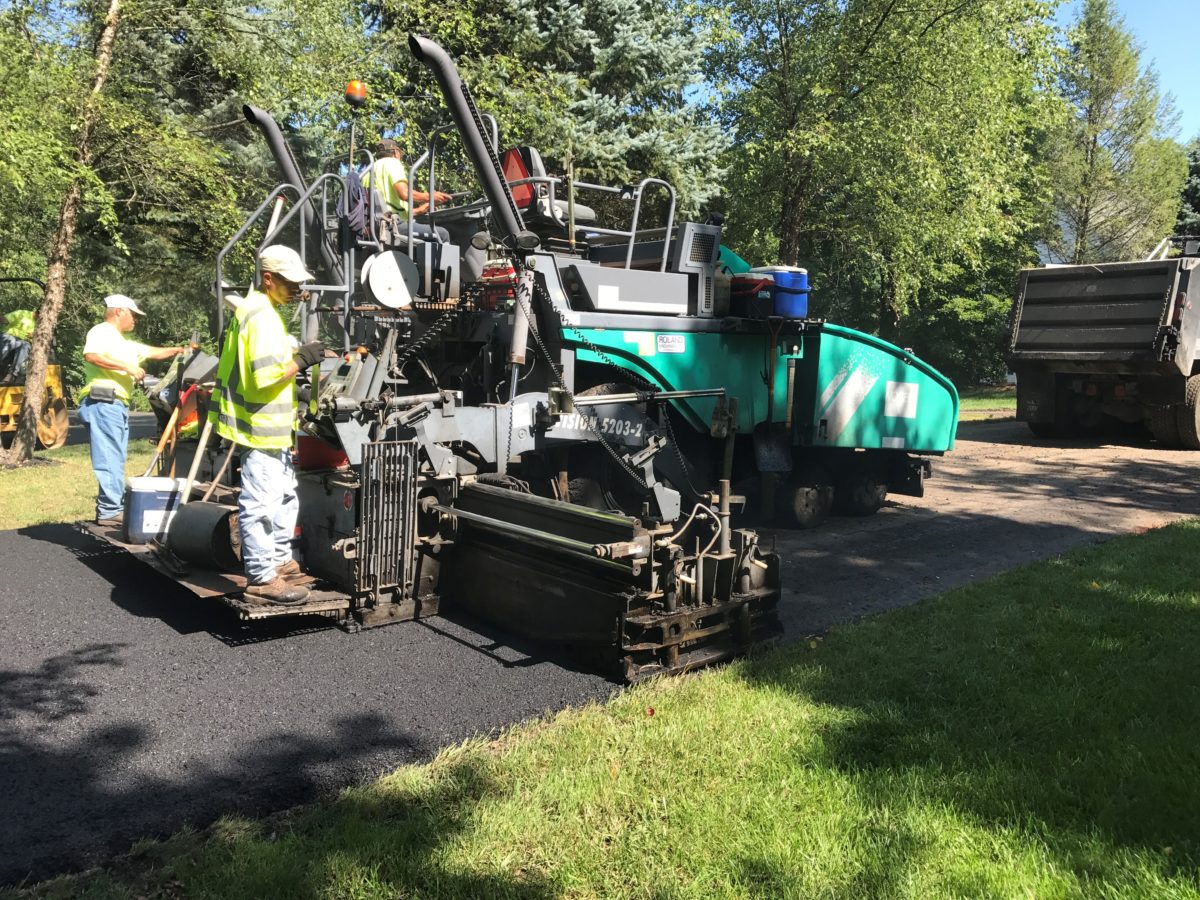
FDR is a game changer for pavement reconstruction. Rather than hauling away old materials, this method recycles the existing pavement and stone sub-base by grinding them up and mixing them with Portland Cement and other materials. The result? A strong, solid foundation for a new asphalt surface that can withstand the demands of today’s vehicles. Not only does this process improve structural capacity, but it also addresses a variety of pavement issues, from rutting and potholes to rough areas and cracking.
What makes FDR particularly attractive is its environmental and financial benefits. By reusing the materials already in place, you can reduce waste and preserve natural resources. Additionally, FDR is typically more cost-effective than traditional removal and replacement methods, providing facility owners and managers with a longer asset life cycle and significant savings. But that’s not all. FDR also offers the opportunity to enhance lot drainage during the reconstruction process, further improving the long-term functionality of the space.
As an approved method for road reconstruction by the Indiana Department of Transportation (INDOT), FDR has proven its success in projects across the nation.
One recent example is our work at Westview Schools in Topeka, IN, where FDR was successfully utilized on the High School and Middle School campus. Despite slight modifications, FDR provided a cost-effective solution to a major renovation challenge for the Warriors.
If you’re facing budget challenges with parking lot or road maintenance, especially when schedules are tight, FDR might be the perfect solution. Let us tell you how this approach can work for your next project, just as it did for Westview Schools!
Celebrating Chris Cook: Inaugural Recipient of the 2024 Michigander Alumni Award
Abonmarche is proud to announce that Christopher J. Cook, the firm’s former President and CEO, has been awarded the inaugural 2024 Michigander Alumni Award by the University of Michigan College of Engineering. This prestigious honor recognizes individuals who have made significant contributions to the State of Michigan and their local communities, reflecting the core values of Abonmarche.
A Legacy of Excellence
With over 35 years in civil engineering, Chris has been instrumental in enhancing transportation, water, and sewer infrastructure across Michigan. His journey at Abonmarche, where he rose from project manager to President and CEO, has been pivotal to our growth and success. Under his leadership, we have expanded our reach, serving clients across Michigan and Indiana from multiple locations.
Community Commitment
Chris’s impact extends far beyond his engineering expertise. His dedication to community service began in his youth and continues to flourish today. He has held various leadership roles, including Chairman of the Benton Harbor Planning Commission, and served on zoning boards of appeals in Cadillac and St. Joseph. For the past 16 years, he has been the Treasurer for the St. Joseph Public Schools Board of Education, where his thoughtful decisions have positively influenced countless students and families.
His commitment to service has not gone unnoticed. For his extensive contributions, Chris has received the ACEC National Community Service award and the Merlin Hanson Exemplary Business Leader Award.
Voices of Support
Ronald Brenke, Executive Director of the ACEC of Michigan, praised Chris’s community involvement, stating, “Chris genuinely cares about issues affecting the quality of life for residents and is always willing to volunteer his time to further a cause.”
Rob Cleveland, President and CEO of Cornerstone Alliance, noted, “Cook has repeatedly put himself in the crosshairs for advancing all Berrien County residents. Under his leadership, Abonmarche has been at the forefront of Benton Harbor’s resurgence.”
Jeff Noel, former Vice President of Communications and Public Affairs at Whirlpool Corporation, commended Cook’s leadership qualities, highlighting his legacy of fairness and ability to unite people around shared goals.
Transformative Contributions
In addition to his community service, Chris has collaborated with the Department of Environment, Great Lakes, and Energy on process improvement initiatives, helping communities across the state reduce costs and access funding. His expertise with the State Revolving Loan Fund, Asset Management, and Capital Improvement Planning has made him a key player in these efforts.
As the current Managing Director of Harbor Shores Development, Chris has been vital in revitalizing Benton Harbor. The Harbor Shores project transformed over 500 acres of blighted property into a vibrant community, featuring a renowned Jack Nicklaus Signature golf course and new residential developments—demonstrating the profound impact civil engineering has on local economic growth.
An Inspiration for Future Engineers
Chris’s journey from a University of Michigan student to a leader in civil engineering serves as an inspiration for current and future engineers. His story reminds us all of the vital role civil engineers play in shaping our communities and improving lives.
We invite you to learn more about Chris Cook and his remarkable contributions to our community. For more information, visit the University of Michigan Alumni Awards or check out the Abonmarche Leadership page for insights into Chris’s impactful career.
On The Boards | Site Engineering & Surveying at the New Valpo Skate Park – Valparaiso, Indiana
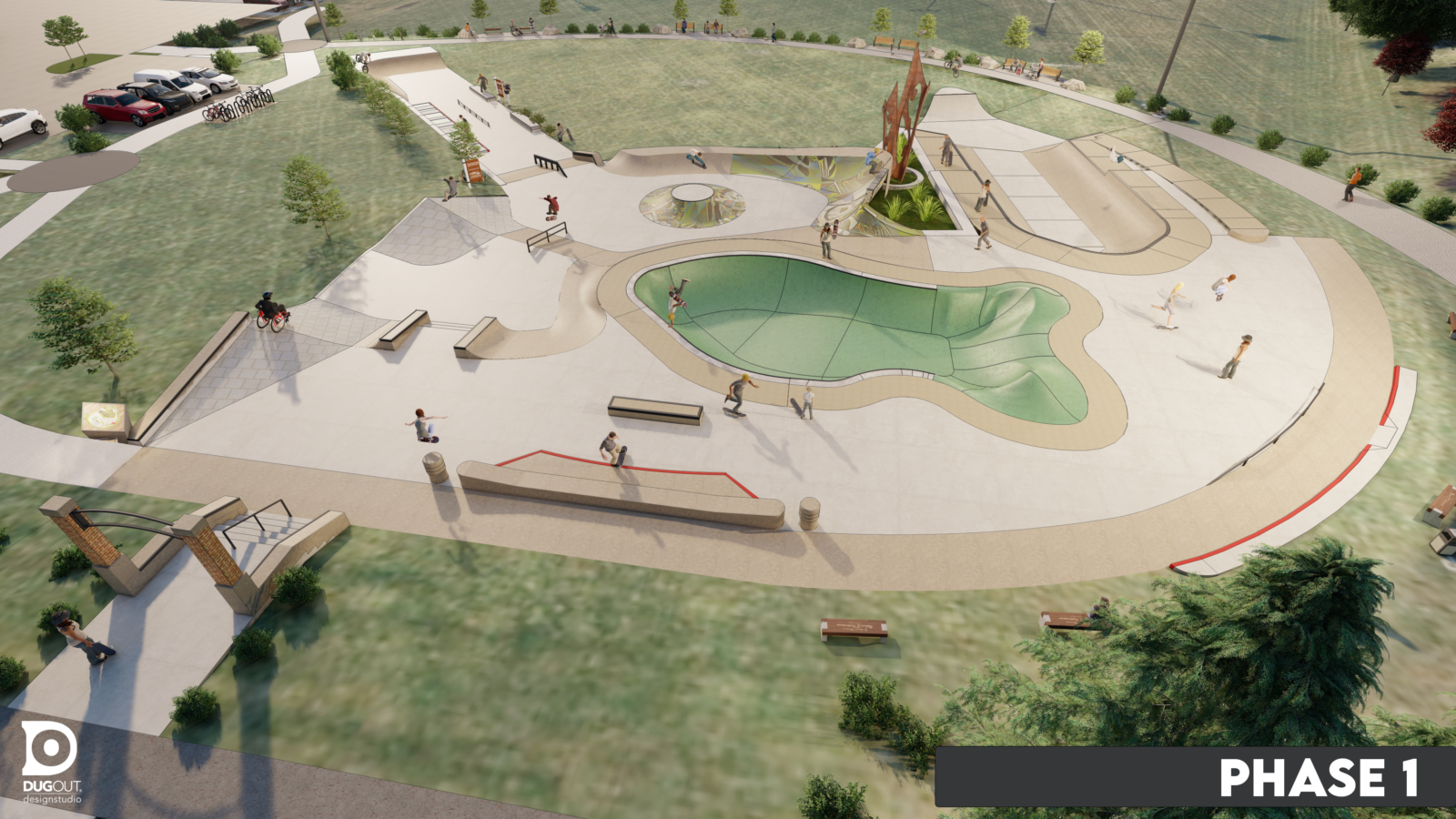
Rendering of the upcoming Flounder & Friends Skatepark in Valparaiso, Indiana. Site engineering and surveying provided by Abonmarche.
What does a community skatepark look like today?
Valparaiso, Indiana is reimagining what’s possible as it brings a modern skatepark experience to a new generation of skate enthusiasts — and a new community gathering place for residents and visitors to enjoy as the city of Valparaiso continues to thrive and expand.
Our team in Valparaiso has served as the engineering force supporting the project, and we’re excited to share that the site’s stormwater improvements kicked off earlier this spring.
This new skate park is such a fantastic development project to be a part of,” notes Matt Keiser, engineering project manager at Abonmarche. “The experience of moving through the process of designing the necessary stormwater improvements and site surveying – it’s extremely rewarding to know that our engineering work beneath this new park is what supports all of the action going on above ground.”
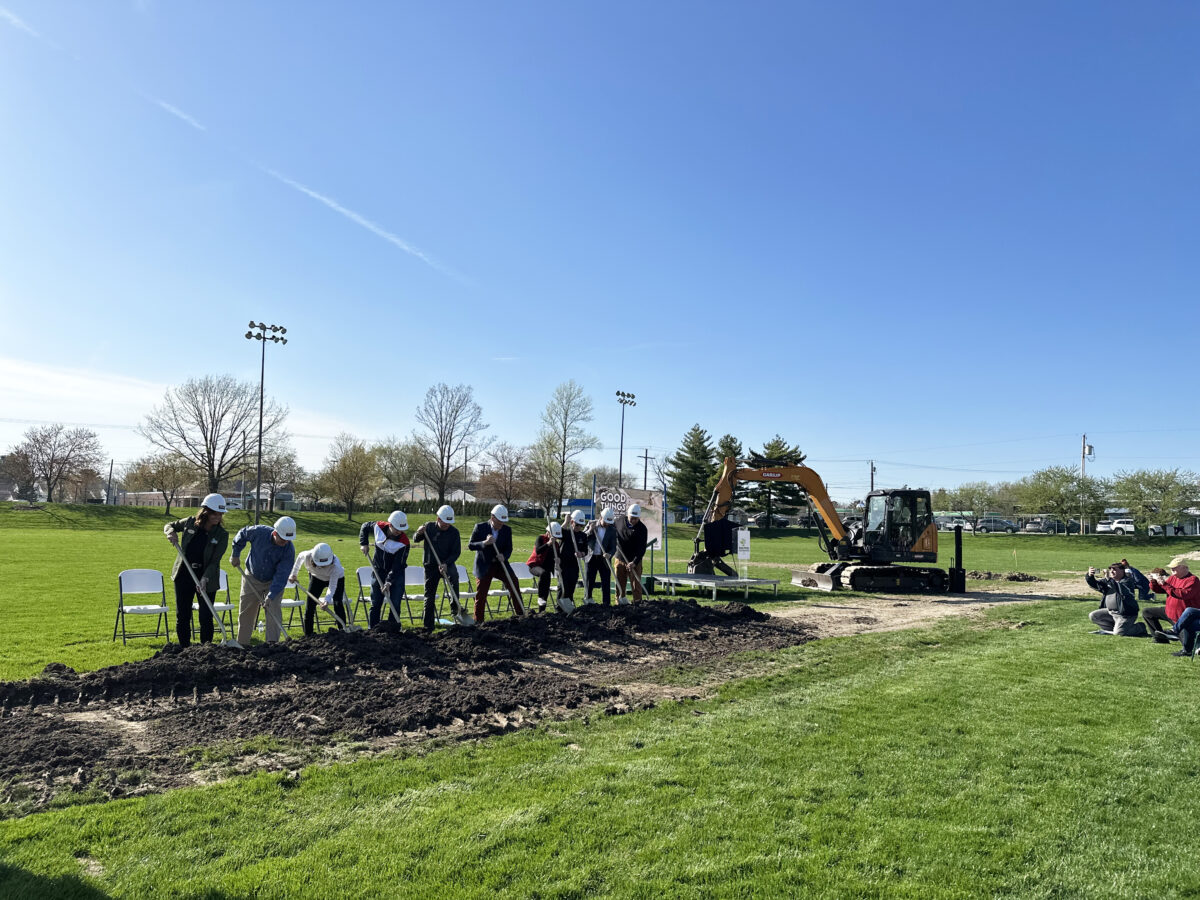
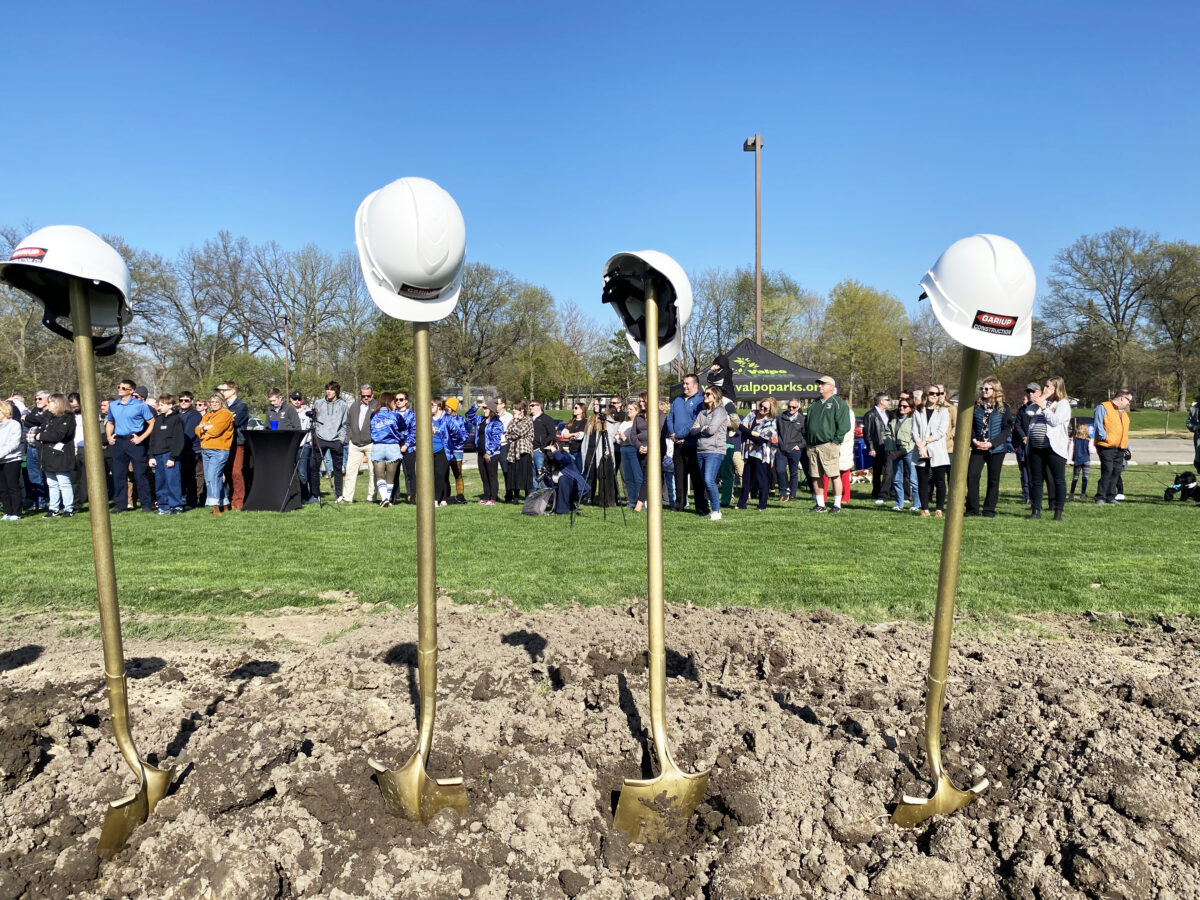
A formal groundbreaking ceremony Tuesday, April 18, kicked off new phases of the project and unveiled the new skatepark’s name – Flounder & Friends Skatepark.
“With purpose, this park will welcome people with adaptive needs, with purpose this park will welcome people of all ages and skill levels, and with purpose this park will welcome residents and friends of Valparaiso,” said Kevin Nuppnau, assistant director of Valpo Parks, during the ceremony. “We’re not just saying it, we are building it, and it starts today.”
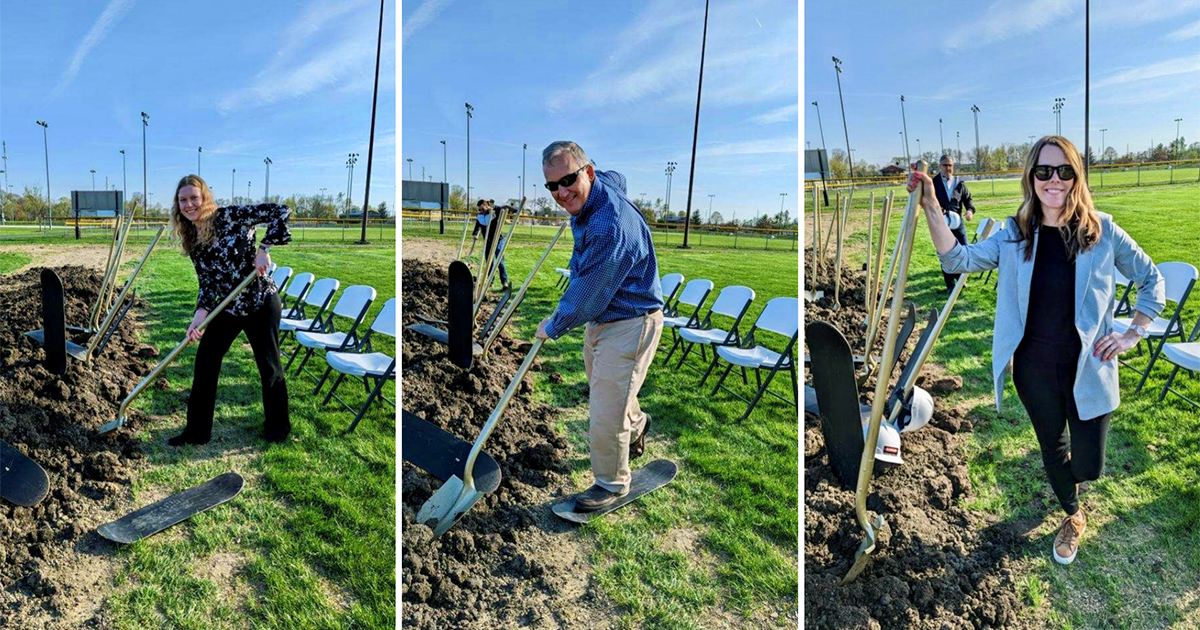
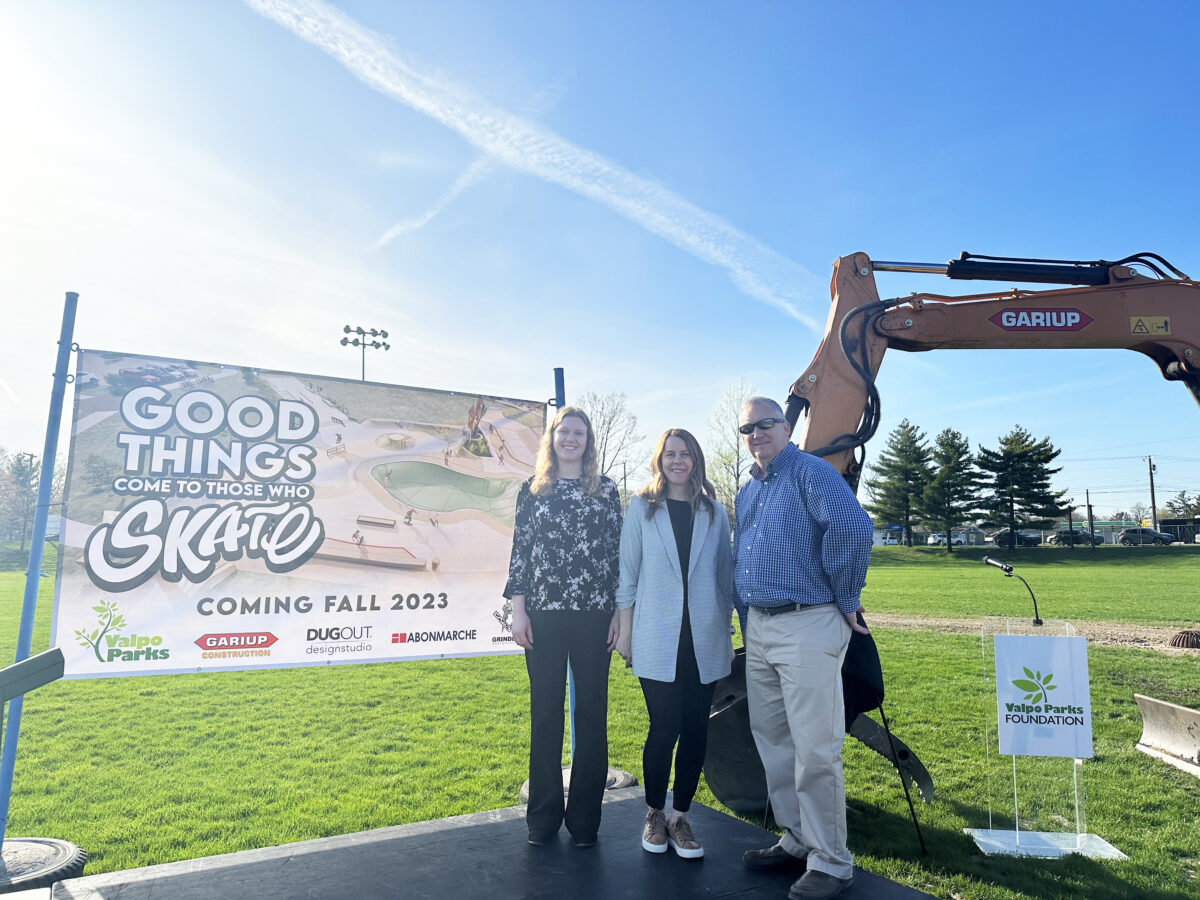
Members of the community of Valparaiso and project team members broke ground at the site of the upcoming state-of-the-art Flounder & Friends Skatepark in Valparaiso, Indiana. Abonmarche project team members Lara Brown, Matt Keiser, and Tara Boyanski helped kick off new phases of the skatepark.
Flounder Skatepark — A New Community Experience
As in every community redevelopment project, the City of Valparaiso hosted an in-depth community engagement effort to understand what people wanted from a new skatepark experience, what was important to them in the park’s features and location, and how the park might bring residents and visitors together in a way that most skateparks fail to do. To maintain the project’s vision and ensure the skatepark becomes a reality, a task force was established among the design and engineering teams, Valpo Parks, and local skate enthusiasts.
In contracting a designer for the new skatepark, the City of Valparaiso reached out to Valparaiso native and X Games Course Design Dug Ketterman, of DugOut Design Studio. Ketterman, a venerated skate park and course designer who has designed some of the world’s most beloved skate experiences, has a special connection to his hometown’s original skatepark.
As a 16-year-old in the mid-1990s, Dug and his friends came to the city of Valparaiso to find a way to design a place to skate. They helped the city design and construct the skatepark, piece by piece. The finished design was named Flounder Skatepark in honor of Dug’s friend Ray “Flounder” Wampler, who was killed in a car accident on his way to school one morning. The first Flounder Skatepark stood from 1998 until 2020, when it closed due to its level of disrepair and unsafe conditions.
Valparaiso reconnected with Ketterman after 20 years to lead the design of a new park in a better location. Once built, the new skatepark will again carry the Flounder name — and will inject the same passion that Valparaiso area skaters bring to their art.
Nestled in the Heart of Valparaiso
To host the site of its new skatepark experience, Valparaiso and its design partners conducted a thorough site review and analysis—eventually selecting a section of its existing Fairgrounds Park. This was a significant departure from the old skatepark location, which was nestled deep into a 122-acre hiking park on the city’s north side; in contrast, the new location, in the center of town and along one of the city’s main thorough-fares, was chosen for its visibility and walkability within the community.
As part of Fairgrounds Park, the new skatepark will be enveloped by a 3/4 mile walking track and situated adjacent to 4 softball fields, a playground, a community pavilion, and a Life Trails System, designed to help adults ages 50+ with functional fitness.
Valparaiso’s park and recreation options are ideal; with more than 700 acres of parkland spread across 17 parks, 27 athletic fields, 14 children’s playgrounds, and two golf courses, people in every corner of the city have a unique park experience to call their own.
With the old skatepark in disrepair, the decision to design a new one came with new opportunities: to create an accessible state-of-the-art skatepark and to shape a citywide gathering place for people from all walks of life.
Abonmarche’s Lara Brown, Tara Boyanski, and Matt Keiser attended the groundbreaking ceremony for the new Flounder & Friends Skatepark in Valparaiso, Indiana. The project is engineered by Abonmarche.
A Modern Skate Experience for All
During an extensive community engagement effort, the design team identified the community’s top desires, then created a design that could be implemented in phases as funding becomes available.
The new skatepark will feature spaces for skateboards, bikes, scooters, and skates — with an emphasis on user-friendliness for many ages and abilities, including beginner, intermediate, and advanced levels. Future phases of the skatepark design will feature a dedicated beginners area along with adaptive features for athletes in wheelchairs.
Ketterman’s design inspiration is “centered around the Golden Spiral, providing a harmonious aesthetic while encouraging growth and inclusivity around the world. We have designed a park that not only meets the needs of the community, but also redefines what is possible…”.
Space to Gather
Flounder Skatepark’s holistic design will reach beyond the city of Valparaiso to become a regional hub for the skating community — creating space for people of many interests, ages, abilities and locations to gather — to have fun, to be active, to learn, and to share in both failure and success. Building a skatepark as a space that will nurture the community of Valparaiso will spread benefits to many other communities across northern Indiana and beyond.
Design: DugOut Design Studios
Site Engineering & Surveying: Abonmarche
Advocacy: Driftwood Collaborative
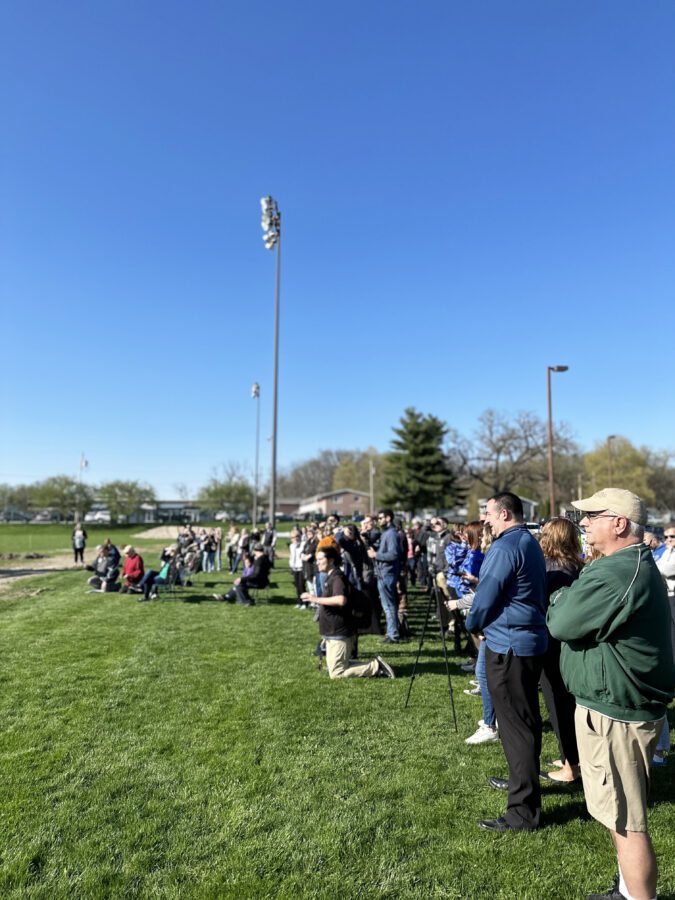
The groundbreaking ceremony saw an excellent turnout by Valparaiso community members, sponsors, and other project partners.
Contact Us today to learn more about our practice.
ACEC/Michigan Honors Abonmarche as 2021 Firm of the Year
Benton Harbor, Michigan –Abonmarche is the newest recipient of the prestigious 2021 Firm of the Year Award bestowed annually by the American Council of Engineering Companies (ACEC) of Michigan.
The award, considered the top honor at ACEC/Michigan’s annual Engineering & Surveying Excellence Awards, seeks to shine a spotlight on an ACEC member firm that excels in community engagement, advancement of the engineering profession, and ACEC involvement.
Abonmarche’s roots in community service run deep. For many years, our firm has served as a leader in supporting communities through active volunteerism and charitable donations. In 2020, our leadership developed Philanthropic and Voluntary PTO programs to support the passions of their staff. Abonmarche employees also enjoy a flexible work-life balance that enables them to accomplish goals outside of work, in addition to their career goals.
Our focus on client service is something we stress every minute of every day,” said Chris Cook, President of Abonmarche. “We have invested heavily in leadership training and in the advancement of each of our staff members’ industry certifications, along with a very successful internal technical staff development program.”
In addition to serving on several ACEC committees and forums, Abonmarche regularly mentors emerging firms. Our staff also often serve as a liaison between ACEC/Michigan, local governments, and several state agencies, helping to establish meaningful connections while advancing ACEC/Michigan goals.
“Thank you to ACEC/Michigan, the member firms who have counseled and advised us, our clients, and our staff, for all of the support you’ve provided us as we’ve grown,” said Cook. “We are proud to serve as an active member of ACEC/Michigan, and we are honored to be selected as the ACEC/Michigan 2021 Firm of the Year.”
ACEC/Michigan presented the 2021 Firm of the Year Award to Abonmarche at its annual Engineering & Surveying Excellence Awards Gala, held virtually Friday, February 26, 2021. For more information regarding the awards submission and selection process, visit www.acecmi.org/engineering–surveying-excellence. To learn more about Abonmarche, visit www.abonmarche.com.
Abonmarche Brings Community Crossings Grant to Northern Indiana
The Community Crossings Matching Grant program is part of Indiana Governor Eric J. Holcomb’s Next Level Roads program, a 20-year, fully funded plan to enhance Indiana’s highways and local roads by awarding communities grants for shovel-ready local road construction projects.
Over the last five years, Indiana has awarded more than $830 million in matching funds to support local road and bridge projects around Indiana.
Abonmarche has been instrumental in helping several communities secure grant funding for local road projects, and it is our goal to bring this grant and its benefits to more of the Northern Indiana communities we serve – helping cities, towns and counties complete additional projects in their jurisdiction to spur community growth and development.
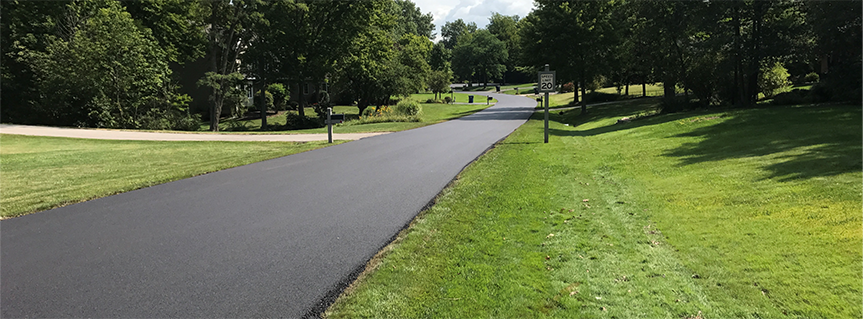
Projects eligible for funding through Community Crossings include road resurfacing, bridge rehabilitation, road reconstruction, small structure replacements, and Americans with Disabilities Act (ADA) compliance in connection with road projects. Material costs for chip sealing and crack filling operations are also eligible for funds.
While this grant presents great opportunities to Hoosier communities, it also presents many hurdles to those who want to apply.
THE CHALLENGE TO INDIANA COMMUNITIES
The grant application and management process can be overwhelming for municipalities of any size, but particularly those communities on the smaller side. Community leaders are trying to balance budgets and staffing limits with the need for supplying added value, community improvements, and future planning.
Each project submitted to the Indiana Department of Transportation (INDOT) for funding is carefully evaluated based on need, traffic volume, local support, the impact on connectivity and mobility within the community, and regional economic significance, noted INDOT in a January 2021 news release. The hoops municipalities need to jump through are significant, but hiring a full-service firm like Abonmarche can make grants like Community Crossings attainable.
“We’ve become very well-versed in how the grant works because we started working with it as soon as INDOT released it in 2016 and have continued non-stop every call for projects that has occurred,” says Matt Keiser, Project Manager at Abonmarche Valparaiso. “As the grant and its administration has evolved, we’ve modified our processes to embrace these modifications with our community leaders. We’ve found that working directly with the Public Works Directors and Clerk-Treasurers, we can properly manage all of the complex moving parts and timeframes involved within the confines of the grant requirements.”
DID YOU KNOW?
Community Crossings is open to all towns, cities, and county government units in the State of Indiana.
The Community Crossings grant gives approximately $160 million/year, and there are many communities who have lost out, by being unprepared or unresponsive to the grant deadlines.
To be eligible for the Community Crossings grant, a municipality must reassess their roadways every two years and update their Pavement Asset Management Plan every year.
Matching funds range from 50 to 75% depending on the size of the community.
INDOT calls for Community Crossings projects twice each year.
The next call for projects is planned to be in July of 2021.
For smaller entities that don’t have the funds and/or staffing, the Community Crossings Matching Grant can be a huge undertaking to try to accomplish in-house.
“This grant gives you the ability to bring tangible improvements to your community, while staying focused on all of the day-to-day work involved in keeping your community on track and running smoothly”, Keiser notes. “Working with our firm on this grant can save valuable time and resources, taking the minutiae off the backs of everyone from superintendents to road commissioners and public works staff so that they can focus on their everyday work.”
Because the grant process is so involved for Community Crossings, we have touchpoints with our clients throughout the entire year, keeping them up-to-date on progress, upcoming deadlines, and getting the grant off the ground and running in their project.
A STREAMLINED GRANT MANAGEMENT PROCESS
Since an INDOT/LTAP approved Pavement Asset Management Plan is required, Abonmarche completes a field assessment of every road segment, utilizing the PASER Rating System. When the assessment is complete, we analyze the results and create a comprehensive Pavement Asset Management Plan, based on the required elements to qualify for the grant.
Abonmarche then can offer assistance in the selection of the projects to be submitted for grant application. After the project list is finalized, our team helps prepares the grant application along with all of the necessary documentation required for submittal.
Once grant funding is awarded, Abonmarche creates the plans, specifications, and bid documents to secure pricing meeting the States requirements for Public purchasing. For many of our clients, we have also provided construction management services for the duration of the projects to ensure the projects are built to the design standards and the grant application.
“Our fees are stable, and our clients know how much our fees will be for their next years of planning,” Keiser says. “There’s a layer of transparency we build into our process that helps these communities plan for the future in a way that they might not otherwise be able to. That element of planning ahead, and knowing which roads need work ahead of time, is invaluable.”
For more information about how Abonmarche can help bring Community Crossings grant funding to your area, contact Matt Keiser at (219) 246-4195 or at mkeiser@abonmarche.com.
UltraCamp: Revolutionizing Camp Management from Their Niles, Michigan Headquarters
UltraCamp, a Michigan-based tech company specializing in camp management software, has been transforming the way summer camps operate across the United States. By helping over 800 camps nationwide, UltraCamp’s software streamlines operations, so camp staff can focus on what matters most—creating memorable experiences for campers
UltraCamp’s Origin and Vision
Founded by individuals passionate about active lifestyles and summer camps, UltraCamp blends technology and tradition to improve camp management. The company’s mission is clear: to empower camp directors and staff by simplifying processes like attendance tracking, automated billing, and staff management, allowing them more time to focus on the camp experience.
“We help camps do more with less work, so directors can focus on what is really important: CAMP.” — UltraCamp
The New UltraCamp Headquarters in Niles, Michigan
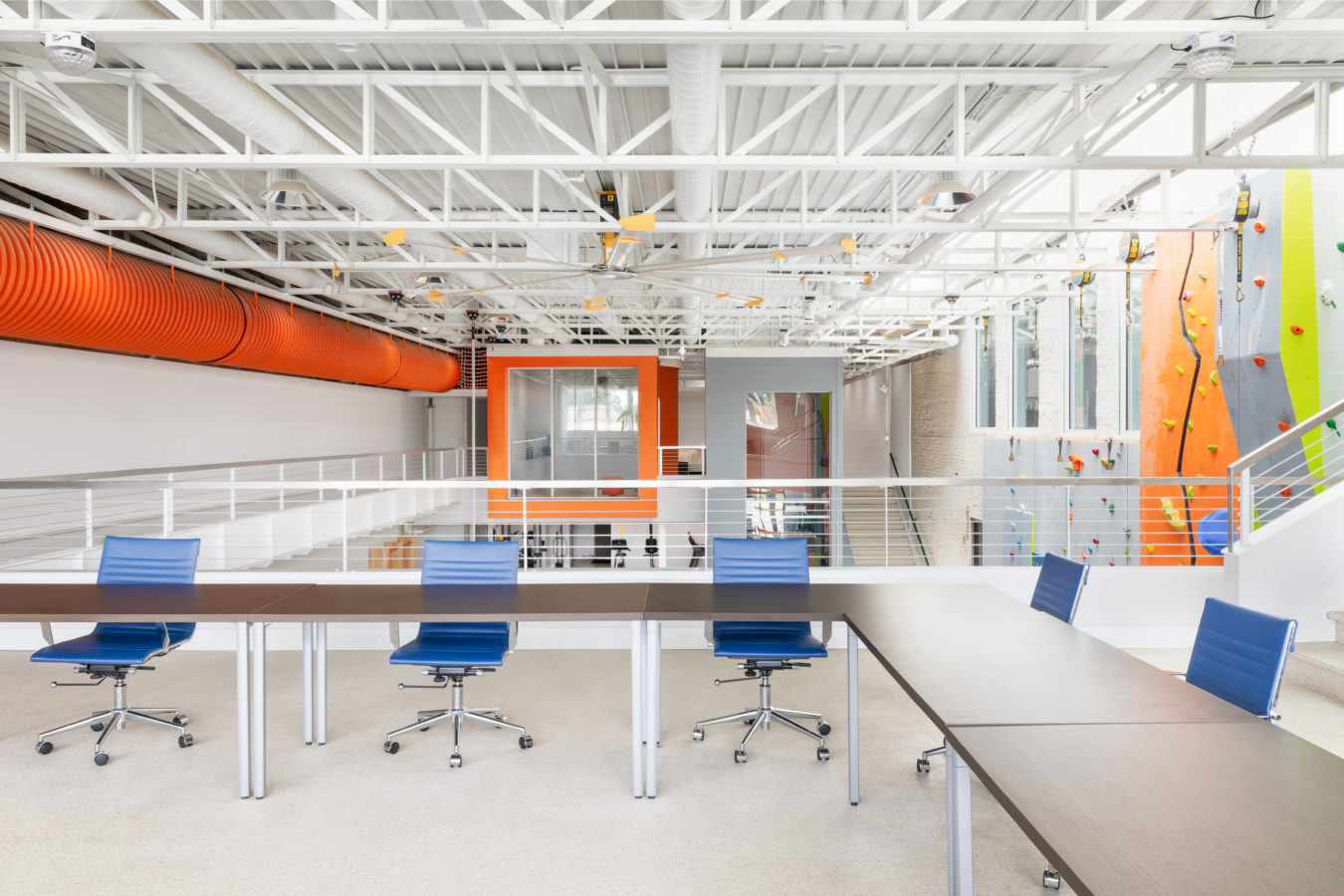
When UltraCamp decided to expand, they chose Abonmarche to design their new headquarters in downtown Niles, Michigan. After outgrowing a historical post office building, they sought a fresh space that would reflect their active culture and promote collaboration.
The result: a space that not only meets their business needs but also supports their active, energetic mindset. Arvin Delacruz, Architect at Abonmarche, explains: “Our job as designers is to translate our client’s culture into the physical environment.”
Designing with Purpose: A Layered Workplace Strategy
UltraCamp’s new office spans 19,401 square feet, with 87% dedicated to collaborative spaces and lifestyle amenities, and just 13% for traditional office workstations. This balanced design encourages collaboration while prioritizing individual workspaces.
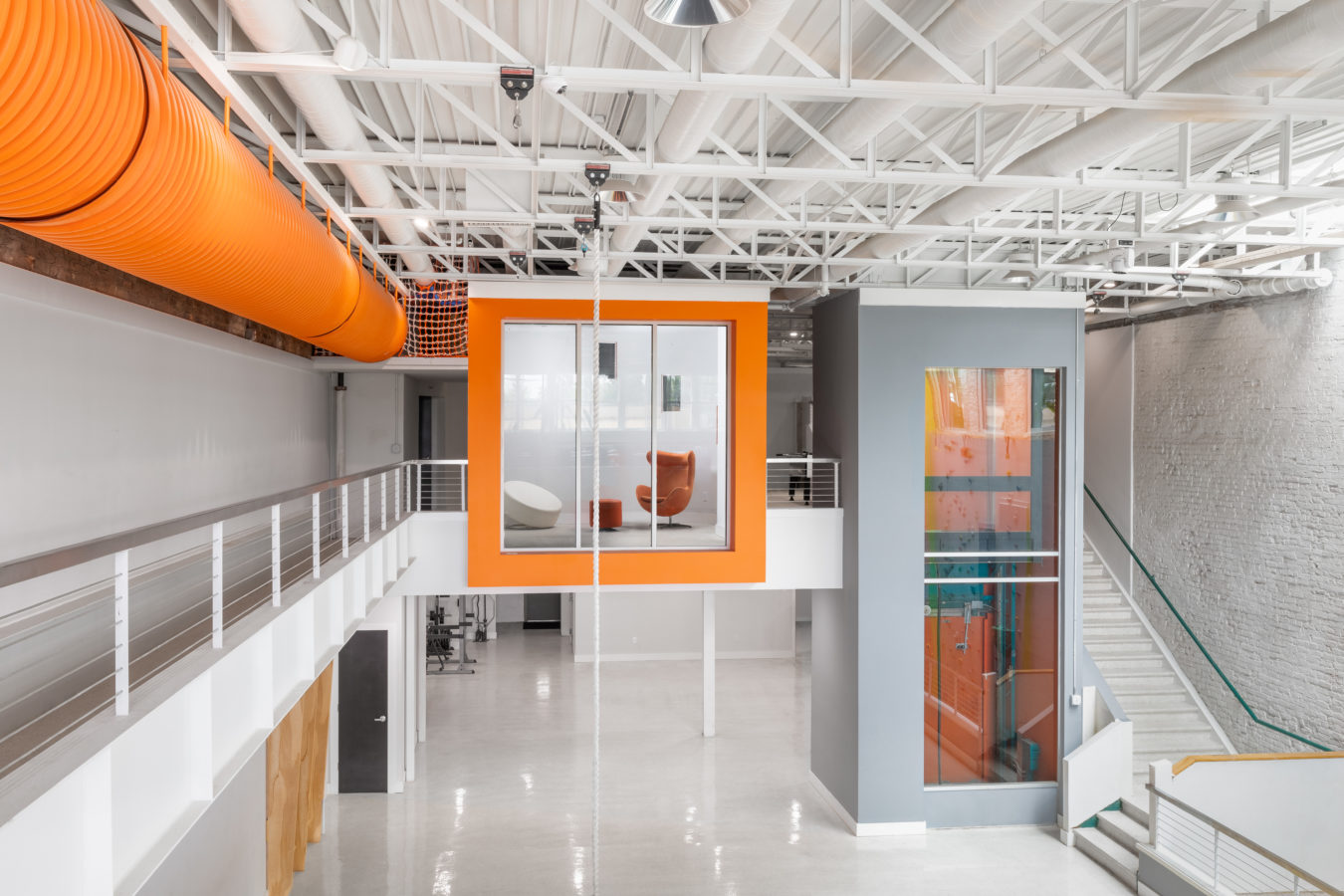
The office layout encourages movement and interaction. The absence of private offices means that the entire office is a shared workspace, fostering a dynamic environment where employees are encouraged to use every part of the building.
“This space is not just an office; it’s a living, breathing environment that supports the entire team.”
Active Lifestyle Aesthetics
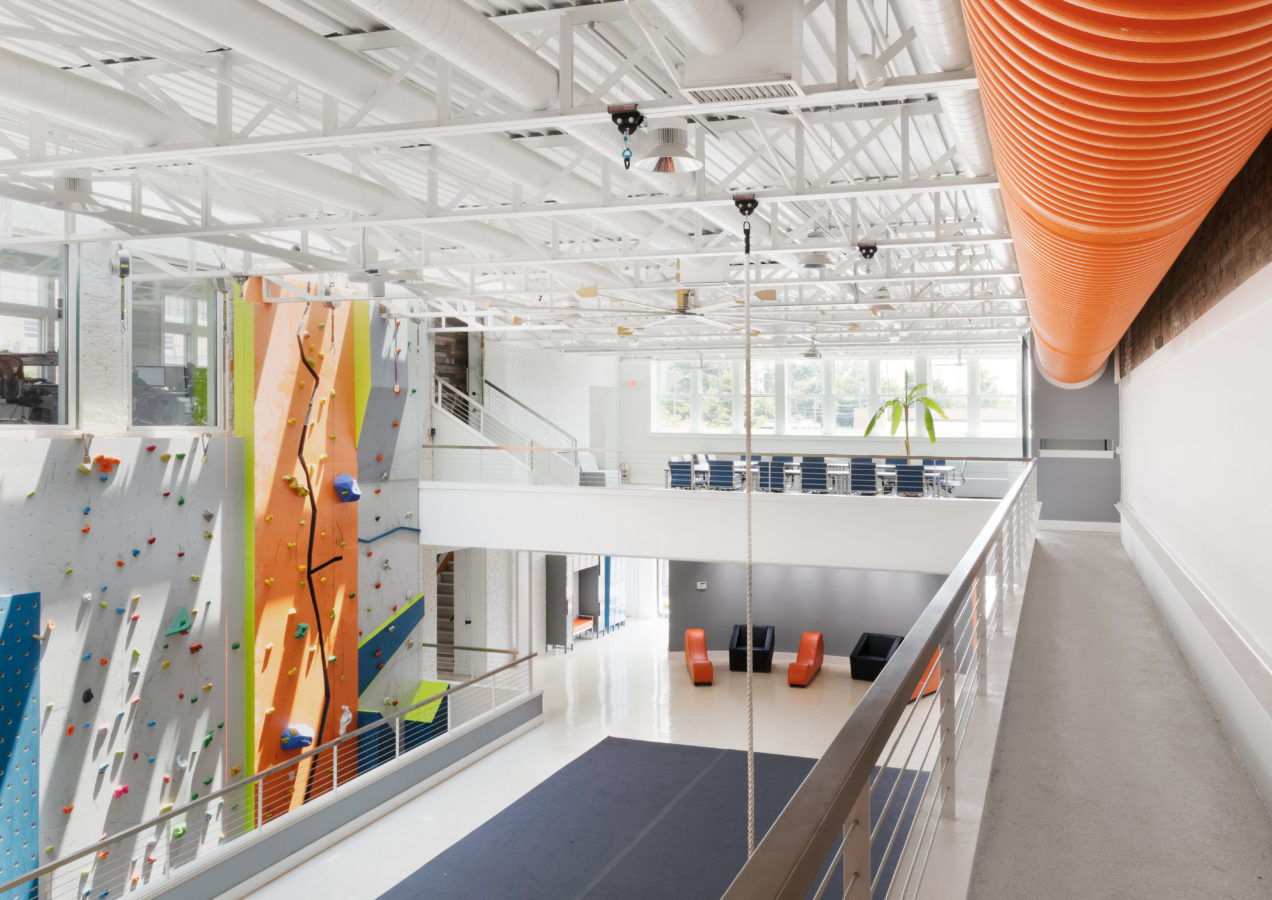
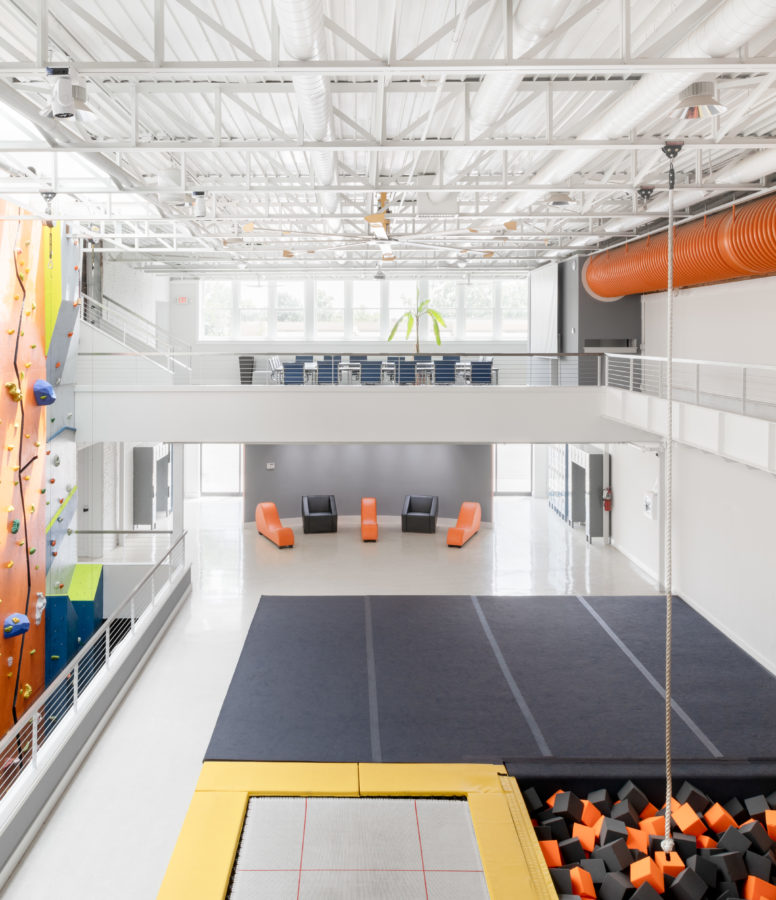
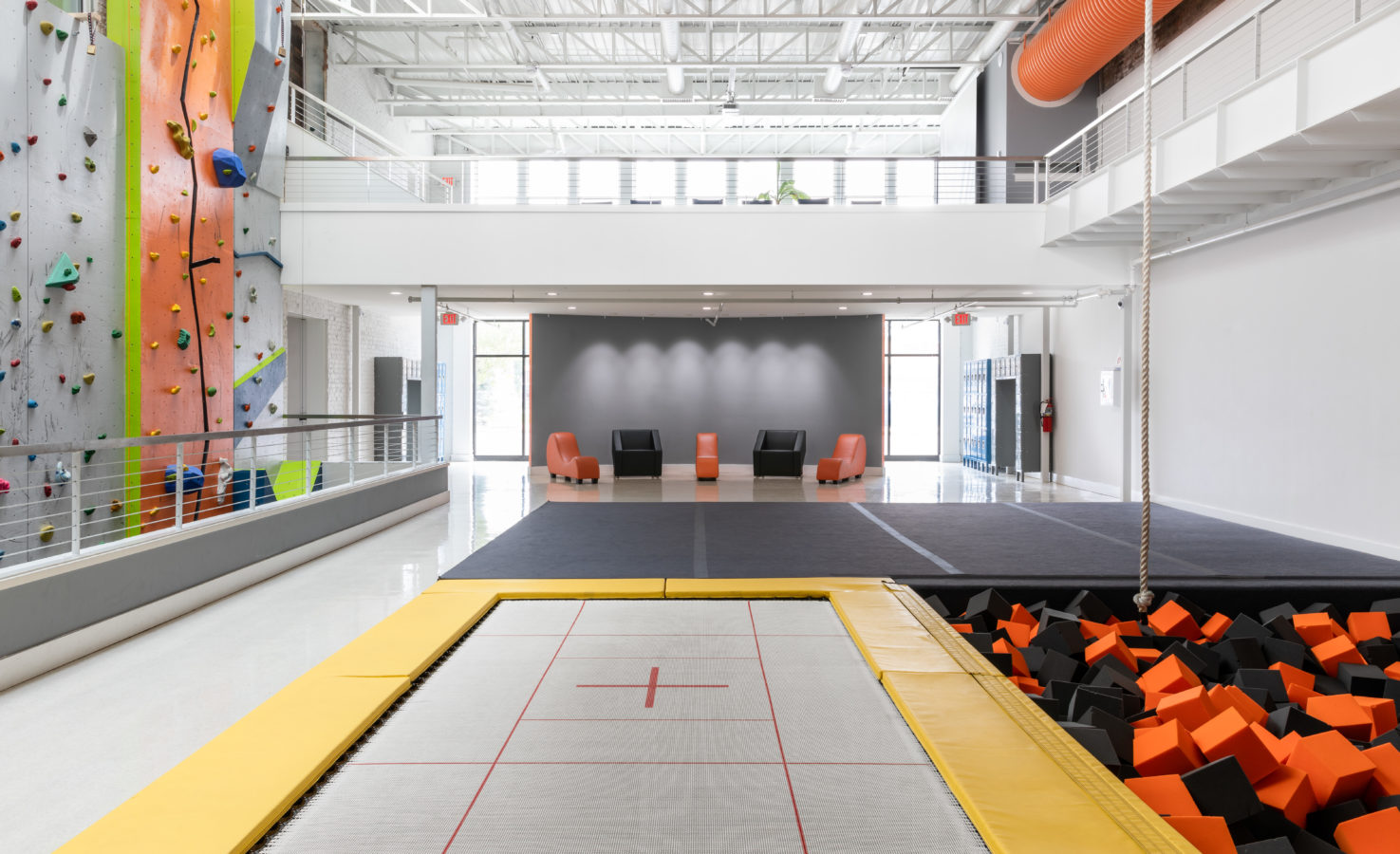
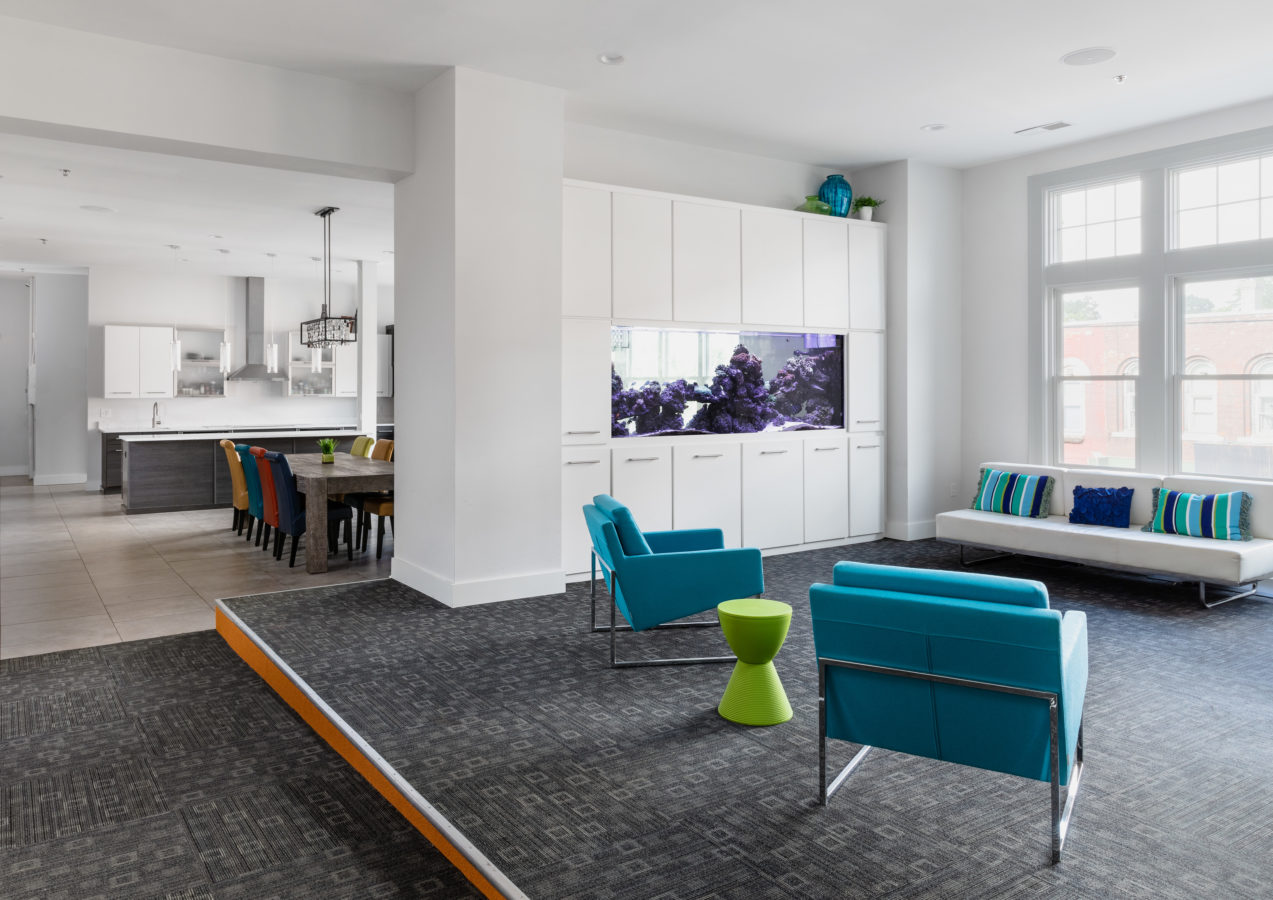
The new UltraCamp office embraces playful, vibrant design that reflects the company’s culture. From a rock climbing wall to a foam ball pit, the space offers fun, engaging features for both staff and visitors. A suspended gerbil tube, once meant for underground storage, was reimagined as a playful element that adds a unique touch to the space.
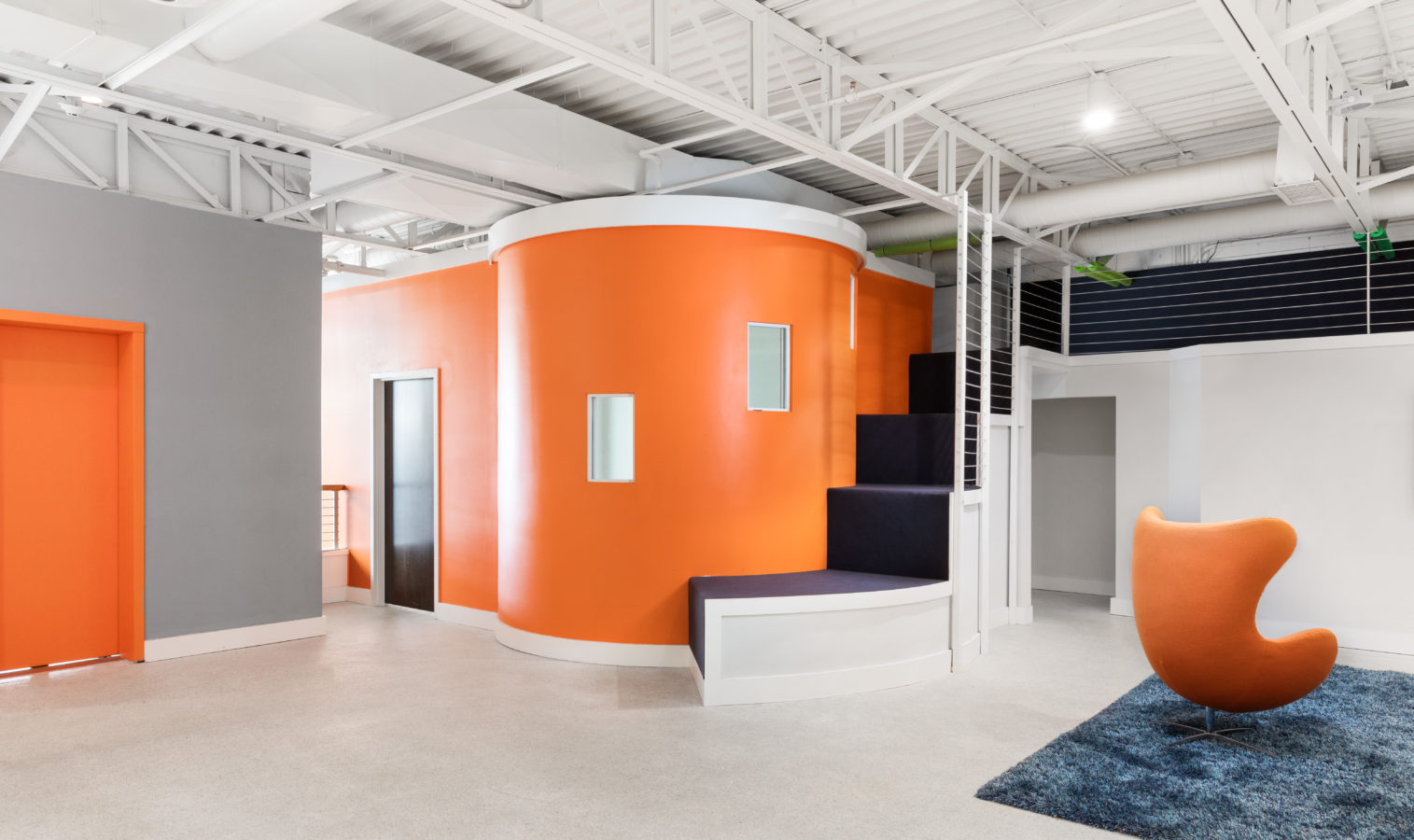
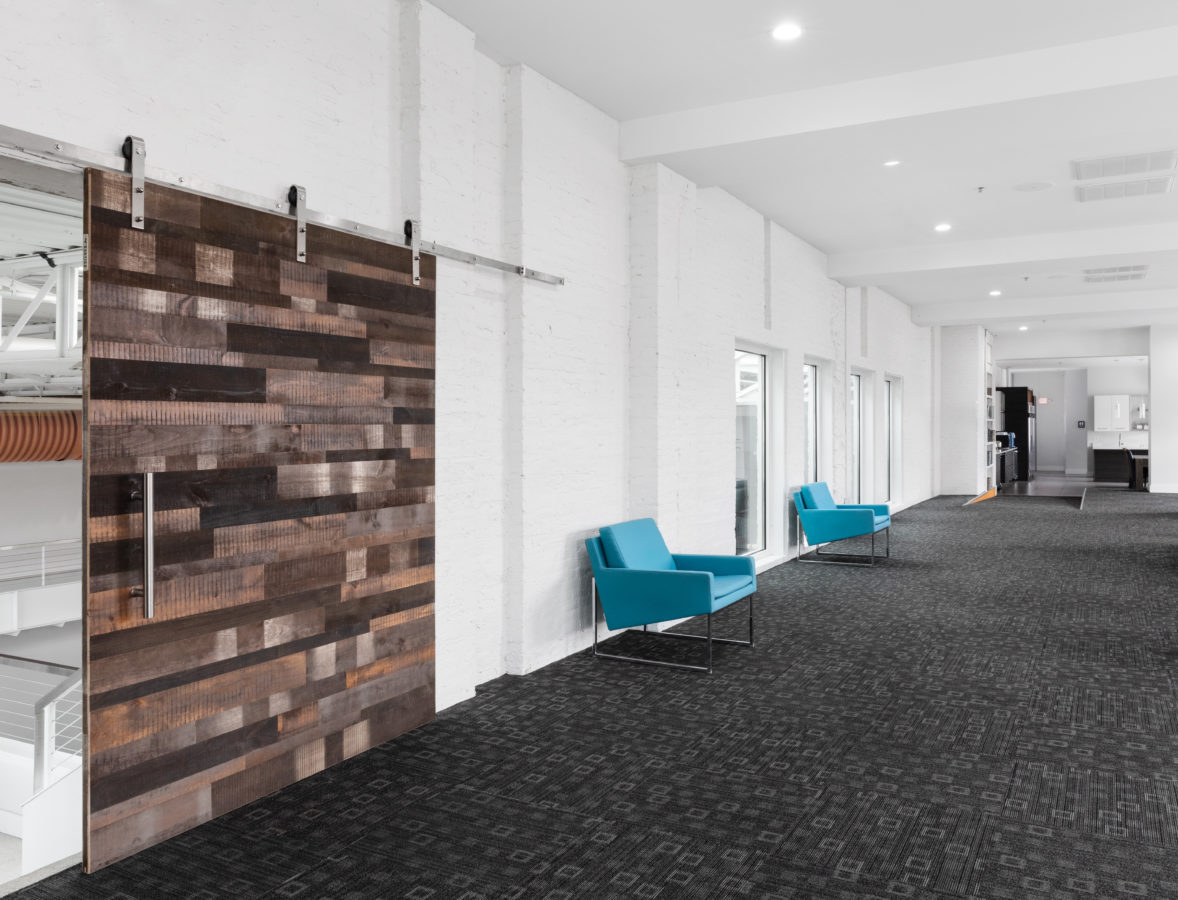
Colorful accents—like bold oranges and blues—create a lively atmosphere, while natural elements, such as recycled wood barn doors, introduce warmth and reflect the company’s active lifestyle ethos.
A Welcoming Space for Collaboration
The office layout includes multiple collaborative areas designed for cross-functional work and socializing. A spacious harvest table, a fully equipped kitchen, and a central living room space make it easy for staff to gather, eat, and bond over meals.
“Food and fellowship are integral to our culture, and this space reflects that.” — UltraCamp
Thinking Outside the Box
Abonmarche’s design team went beyond expectations to create a space that’s both functional and inspiring. The design team embraced the challenge of elevating mundane materials and integrating them into a high-tech yet comfortable environment.
“We let the space speak to us and focused on designing spaces that UltraCamp would truly use.”
The result? A space that inspires creativity and innovation while supporting the physical and emotional needs of the UltraCamp team.
A Catalyst for Community Growth
Since moving into their new headquarters in June 2017, UltraCamp has become a hub for innovation in downtown Niles. The office serves as a community center, hosting events and fostering connections within the local business scene. UltraCamp’s bold move has inspired others, proving that transformative design can thrive even in small communities.
“If UltraCamp can do something like this in Niles, then I can too.” — Local Business Owner